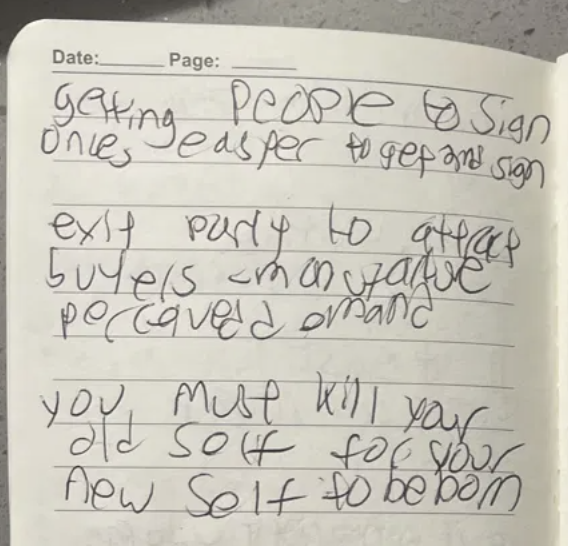
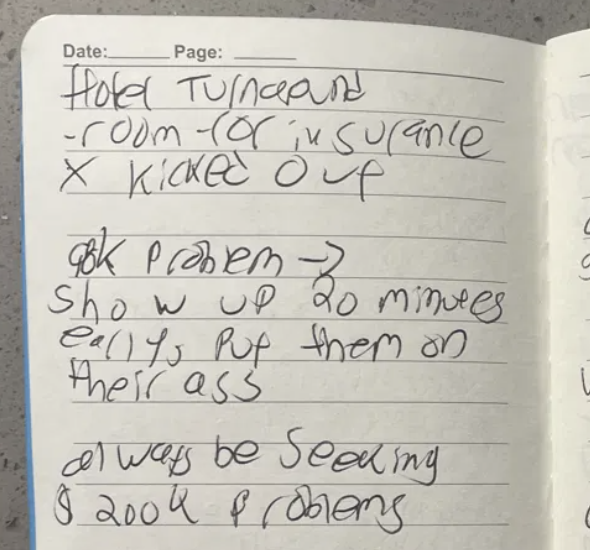
That was the line the whole dinner centered on, and it's the one I’d want to keep if nothing else. Most people never find big opportunities because they aren't actually looking for them. They're looking for a job to be fine, a week to go smoothly, a client to not churn. Their attention is set to maintenance. The guy across from me had his attention set to something else entirely. He scanned every situation in the room, the restaurant, the rooftop pool party at the Ellie, the people walking past the window, for the version of it that was worth six figures.
A tired weekly event at a nice hotel wasn't a tired event to him, it was $55,000 sitting in plain sight waiting for someone to repackage it. That reframe is the entire skill. Once your eye is trained to it, the opportunities are everywhere and it's almost annoying, because you see how much value is left on the ground by people who never thought to look. Until your eye is trained to it, they may as well not exist. You walk right past the same money every day. To be honest, I still think I have a ways to go in enacting this frame for myself, and carrying it day to day. Everything else he taught was really a tool for acting on that one instruction. Three of them stuck with me in particular.
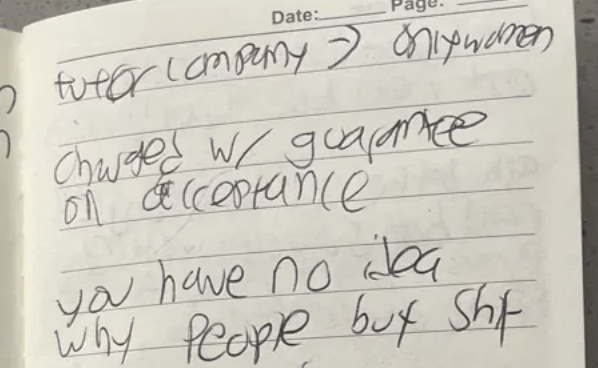
The first tool was value. All that matters is value, real and perceived, and you have no idea why people actually buy things. You have no idea why people buy shit. That last part is the one that stings, because everyone thinks they know. You built the thing, of course you know why it's good. But you don't get to decide what's valuable. The market does, and it's almost never the feature you were proud of. It's some benefit you considered obvious, or some feeling you didn't know you were selling. So, you can’t just build what you think is great and then wait around to be understood. It's to find what people already reach for their wallet over, and get as close to that as you can. Perceived value is not a dirty word here. What people believe they're getting is part of what they're actually buying, and pretending otherwise just means you leave money for someone less precious about it. It’s almost an ethical obligation to charge more because it makes people genuinely more invested. Thus, they take the necessary actions to get the desired result. Thus, it is genuinely more valuable.
The second tool was the one he called external APIs. Take something that already exists and works, build one layer on top of it, and make it yours. You don't have to invent the restaurant to eat off its foot traffic. Stand out front with a bowl of fortune cookies and give them out for free. This has two lessons embedded: You can give something away for free to get people in the door and generate new opportunities for yourself. You can have the wherewithal to be looking around you to see when people who have something already built aren't doing something obvious and good, and make money off of that arbitrage. Write the 26th chapter of the book because you know it better than the author.
You don't have to originate the idea to own the better version of it. The world is full of things that already function, already have demand, already have a crowd standing in front of them, and most people treat all of that as someone else's territory. He treats it as raw material. Most of the money isn't in the thing itself. It's in the layer somebody was too proud or too lazy to add on top.
The third tool was the one he beat me over the head with, because I didn’t quit doing it; stop asking stupid questions. Ask empowering questions. When I asked him something one-word and lazy, he'd shut it down on the spot and tell me to ask an empowering question instead. By the end I got the point. A stupid question gets a stupid answer and kills the conversation. It derails the whole search for the $55,000 opportunity, because the opportunity was going to come out of the person across from you if you'd let it. An empowering question does the opposite. It gets someone to beam, open up, and start telling you their life story. It fills a four-hour dinner with the kind of detail that big opportunities are actually hiding inside. The nitty gritty is all that matters. The quality of what you find is capped by the quality of what you ask.
Put the three together and the $200k opportunity stops being mystical. You're hunting for something people already pay for, which is value. That you can stand on top of and improve, which is the external API. That you dig out of people by asking questions worth answering. At a scale that's actually worth your time, which is the $200k filter doing its job. Strip the mystique and it's a skill you practice, not luck you wait for.
That's the reframe that I found particularly valuable. Opportunity is something you go and generate on purpose.
Before I get to the end, there's one more thing I took from the night that's less about money and more about me. For most of the dinner I was in my own head, half-arguing, defending what I already thought, waiting for the part where I'd get to be right. And I could feel it making me worse. The more I clung to my existing frame, the less I actually absorbed. The guy's whole edge, underneath the tactics, was that he stayed loose and open while I stayed rigid. And it doesn’t help that I was just wrong too. Openness to other people's ideas isn't a soft virtue, it's a competitive one. If what you think you know isn't making you rich yet, gripping it harder isn't the move. The willingness to let a new idea reframe you, to be a little malleable, to update instead of dig in, is the thing that actually changes your life. I lost some of that at the table by getting defensive, and I want it back.
And here's the part I have to be honest about, because honesty is the actual through-line of the night. None of the money stuff was “new” to me. Hunt for big opportunities. Sell what people actually value, not what you're attached to. Build on what already exists instead of starting from nothing. I've read all of it. If you're the kind of person who reads this stuff, you've read all of it too. On paper there was nothing at that table I could call a discovery.
But I paid $50 for the notebook I took these notes in, and I'd pay it again, because knowing a thing and running it at a high level are different things entirely. He didn't tell me these ideas. He was living, and has been for as long as I’ve been alive, operating at a level I'm not at yet, and the distance between his version and mine was the whole lesson. Watching someone operate many tiers above you does something that re-reading the same idea for the tenth time never will.
It stops being a sentence you agree with and starts being a standard you feel behind on. That feeling behind is useful, so I'm keeping it. He asked why I'm not rich yet, and he's right that I should be further along than I am. I’m unc and need to wrap it up, and should already be a millionaire, and it’s my fault I’m not. It’s a consistency problem, and it’s an effort problem. It isn't a knowledge problem. I can recite all of this. The gap is consistency, the boring daily kind, and that one's on me. The advice was never the hard part.
Hunting for $200k opportunities like I mean it, every single day, is.